
WORLD AID DAY 2024
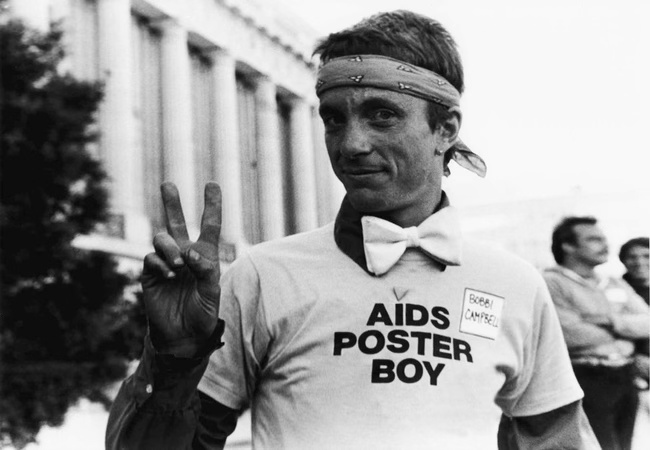
LES K WRIGHT
Today I observe my 43 years of living with HIV/AIDS. I was 28 when I was infected. I am now 71. To say I have been “surviving and thriving” is a facile sound byte that doesn’t hint at what that actually means.
I am a member of the ‘forgotten generation” of long-term AIDS survivors, living with HIV/AIDS for 43 years. I was infected in San Francisco in 1981. At the time a mysterious “gay disease” was discovered spreading among urban gay men in New York and San Francisco.

Down the street from my house in the Castro a hand-written noticed was taped to the window of Star Pharmacy, on the corner of Castro and 18th Streets, announcing and sending an alarm that there was a mysterious “gay disease.” This is how I learned about it.
Within two years the educated understanding was that every gay man in San Francisco was infected and every gay man would die from AIDS. We feared this would lead to the end of the gay community. We were shunned by doctors and nurses, firefighters and police, funeral directors, and others. This traumatizing stigmatizing was exacerbated by authorities labeling it “GRID” (Gay-Related immune Deficiency).
Left on our own to cope with the epidemic (medical, psychological, homelessness, and other issues), the San Francisco gay and lesbian community banded together to take care of each other. What grew out of that became known as the revolutionary San Francisco Model of AIDS Care.
https://en.wikipedia.org/wiki/The_San_Francisco_model_of_AIDS_care
I tested positive for exposure to HTLV-III virus in 1986. (Th political battle over who had first discovered the virus was making headlines at the time —the French medical researchers called it HIV and the Americans called it HTLV.)
In 1992 I was officially diagnosed with “Disabling ARC” (AIDS-Related Condition) and went on SSI permanent disability. This initial category was later reclassified as “full-blown AIDS.”
In response to us long-term survivors being forgotten, I am working on an anthology called
Children of Lazarus: Voices of the “Forgotten Generation” of Long-Term AIDS Survivors
It will be published by Bearskin Lodge Press in 2025.
People who have lived with HIV for decades are known as HIV long-term survivors. Learn about the unique experiences of those who lived through the epidemic’s most brutal, unjust years.
HIV LONG-TERM SURVIVORS DECLARATION:
Envisioning a Future We Never Imagined
Long-Term Survivors of HIV, Submitted on Nov 8, 2023, View/Print PDF
Who Are HIV Long-Term Survivors?
“We were a group of people who were willing to stand up for ourselves and for others and face what the world had to offer. … Those living with HIV today can never [imagine] the horrors many of us had to endure in the early days of this epidemic. I wish I didn’t remember – I wish I could forget.” Vickie Lynn, Drawing Lines in the Sand, A Girl Like Me
Powerful HIV drugs now make it possible for people living with HIV to live far longer lives than could have been imagined before effective HIV treatment became available. This is one of the greatest successes of modern medicine. Those who have lived with HIV for many years are often called long-term survivors (LTS).
There are a few definitions describing HIV LTS. One definition of LTS refers to those who have been living with HIV since before the modern era of effective HIV drugs, or “highly active antiretroviral therapy” (HAART). They are sometimes known as pre-HAART LTS or “longest-term survivors.” They acquired HIV when the condition was, in most cases, a death sentence. They often spent their early adult lives believing they would die young – and watching scores of friends die of the health condition with which they themselves were living. This kind of traumatic experience can leave a lasting mark on people’s lives, and affect mental and physical health, as well as financial stability and overall quality of life.
Another definition refers to people who have been living with HIV for more than ten years, and who were diagnosed after 1996. This group is sometimes known as post-HAART LTS. This is considered a very different experience than being diagnosed earlier in the epidemic.
Due to longer survival with HIV, the percentage of older adults living with HIV is increasing in all regions of the world. However, not all HIV LTS are older adults. People now in their twenties, thirties, and even early forties, who acquired HIV at birth or while very young, have also lived with HIV for decades. For more information about lifetime survivors (also known as Dandelions), a unique group of long-term HIV survivors, please see our fact sheet on lifetime survivors of HIV.
Another group of long-term survivors that tends to be left out of conversations about long lives with HIV are the HIV-negative partners, companions, caretakers, community members, activists, and frontline professional care providers who directly supported people living with HIV in the earliest days of the epidemic. While this fact sheet will focus on people who have lived many years with the virus in their bodies, many HIV-negative LTS also experienced tremendous losses and had their lives deeply affected by the epidemic.
A few people may live with HIV for a long time without taking HIV medications and still not get very sick (progress to AIDS). They are called “long-term non-progressors.” The chances of being such a non-progressor are very slim. The vast majority of people who acquire HIV will eventually progress to AIDS, if they do not take HIV medications. That is why medical bodies across the world recommend that people start taking such medications as soon as they are diagnosed with HIV.
AIDS Survivor Syndrome (ASS)
AIDS Survivor Syndrome (ASS) is a term describing the psychological results of living through the most brutal, unjust years of the HIV pandemic. Pre-HAART LTS are especially vulnerable to ASS. Symptoms of ASS include, but are not limited to:
- Anxiety, nervousness, or sense of feeling constantly ‘on guard’
- Depression
- Irritability or flashes of anger
- Lack of future orientation
- Low self-esteem and self-worth
- Substance abuse
- Social withdrawal and isolation
- Survivor’s guilt
Survivor’s guilt is common among survivors of natural disasters, violent conflicts, and epidemics. It refers to the feeling that many survivors have that they have done something wrong in surviving a traumatic event when others did not survive.
ASS is sometimes compared to post-traumatic stress disorder, or PTSD, which is often associated with soldiers returning from war. However, ASS may have more in common with what is called complex PTSD, which results from enduring multiple traumas over a long period of time.
We must remember the heroes of the AIDS epidemic, not just the trauma:
https://lasvegassun.com/news/2024/jun/16/we-must-remember-the-heroes-of-the-aids-epidemic-n/
NAMES PROJECT AIDS MEMORIAL QUILT
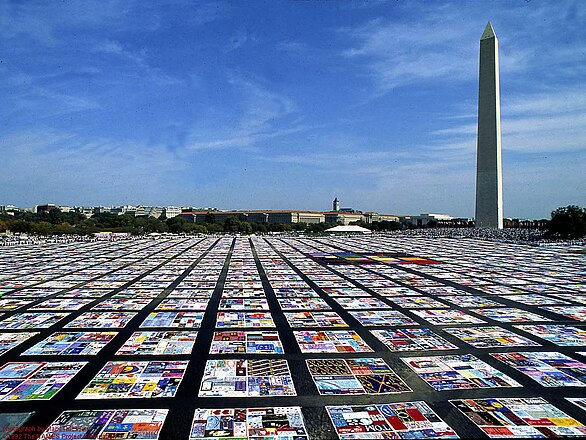
https://en.wikipedia.org/wiki/NAMES_Project_AIDS_Memorial_Quilt
https://www.aidsmemorial.org/quilt-history
Today, the National AIDS Memorial is the steward of the entire Quilt and all 50,000 panels are located in San Francisco.
AIDS MEMORIAL GROVE, SAN FRANCISCO

https://www.aidsmemorial.org/grove
https://sfrecpark.org/Facilities/Facility/Details/AIDS-Memorial-Grove-221

GRACE CATHEDRAL, SAN FRANCISCO
The Keith Haring Altarpiece, a white gold- leaf triptych featuring winged angels in the distinctive Haring style in the AIDS Memorial Chapel in San Francisco’s majestic Episcopal Grace Cathedral.
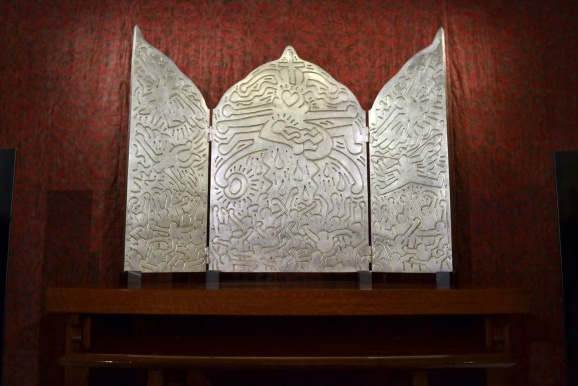
 Les K. Wright